
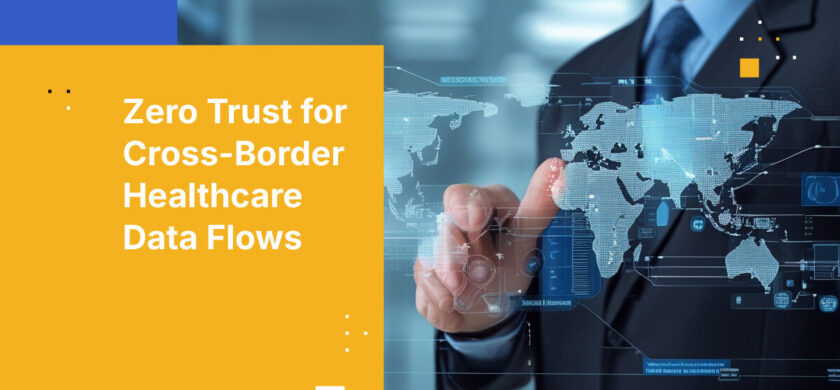
Cross-Border Healthcare Data Exchange: Enterprise Security Requirements for Global Patient Information
Healthcare organisations increasingly operate across international boundaries, creating complex data exchange requirements that demand sophisticated security architectures. Patient records, research data, and clinical trial information routinely cross jurisdictional lines through provider networks, research partnerships, and telemedicine platforms.
Cross-border data exchange presents unique challenges that traditional healthcare IT systems weren’t designed to address. Organisations must simultaneously satisfy multiple regulatory frameworks, maintain end-to-end visibility of sensitive data flows, and ensure consistent security controls across diverse international environments.
This analysis examines the architectural and governance requirements that healthcare providers need to establish secure, compliant cross-border data exchange capabilities while maintaining operational efficiency and regulatory defensibility.
Executive Summary
Cross-border healthcare data exchange requires enterprise-grade security architectures that address jurisdictional complexity, regulatory diversity, and operational scale simultaneously. Healthcare providers cannot rely on traditional IT approaches when patient data crosses international boundaries through research collaborations, provider networks, or telemedicine platforms.
The core challenge lies in maintaining consistent security controls and audit capabilities across multiple regulatory frameworks while preserving the operational efficiency that healthcare delivery demands. Organisations need unified data governance structures that enforce data-aware policies, maintain tamper-proof audit logs, and integrate seamlessly with existing healthcare IT infrastructure.
Success requires purpose-built platforms that combine zero trust network access (ZTNA), automated compliance mapping, and comprehensive audit capabilities within a single architectural framework designed specifically for sensitive healthcare data in motion.
Key Takeaways
- Overlapping Regulatory Frameworks. Healthcare organizations must satisfy multiple regulatory requirements simultaneously through unified governance structures that map controls across jurisdictions.
- Zero Trust Architecture Necessity. Traditional perimeter security fails in cross-border scenarios, requiring zero trust for consistent controls across international networks and third-party systems.
- Data Residency Compliance. Automated data classification and routing prevent violations of geographic restrictions while maintaining clinical workflow efficiency.
- Tamper-Proof Audit Trails. International data flows demand forensic integrity, chain of custody, and verifiable logging systems for regulatory investigations.
Regulatory Complexity in International Healthcare Data Flows
Healthcare organisations operating across borders face overlapping regulatory compliance requirements that traditional compliance approaches cannot adequately address. Each jurisdiction imposes specific data privacy obligations, cross-border transfer restrictions, and audit requirements that must be satisfied simultaneously when patient information moves between countries.
The challenge extends beyond simple data localization requirements. Healthcare providers must demonstrate that security controls remain consistent regardless of data location, that access controls align with clinical necessity across all jurisdictions, and that audit trails maintain forensic integrity throughout international transfer processes.
Data classification becomes critical in this environment. Healthcare organisations need automated systems that identify sensitive information types, apply appropriate geographic restrictions, and route data flows according to regulatory requirements without disrupting clinical workflows. Manual classification approaches introduce human error and create compliance gaps that regulatory authorities increasingly scrutinise.
Compliance Mapping Across Multiple Frameworks
Effective cross-border healthcare data exchange requires sophisticated compliance mapping capabilities that translate diverse regulatory requirements into unified technical controls. Healthcare providers cannot maintain separate security architectures for each jurisdiction while preserving operational efficiency.
Compliance mapping involves creating technical policy frameworks that satisfy multiple GDPR, HIPAA, and other regulatory standards simultaneously. This includes establishing data retention periods that meet the most restrictive applicable requirements, implementing access controls that satisfy various clinical necessity standards, and maintaining audit granularity that supports regulatory investigations across all relevant jurisdictions.
The operational challenge lies in ensuring that compliance mappings remain current as regulatory frameworks evolve. Healthcare organisations need automated policy update mechanisms that incorporate regulatory changes without disrupting existing data flows or creating temporary compliance gaps.
Zero Trust Architecture for Healthcare Data in Transit
Traditional perimeter-based security models fail when healthcare data traverses international networks, third-party systems, and cloud environments that healthcare providers cannot directly control. Zero trust architecture becomes essential for maintaining security posture consistency across diverse international environments.
Zero trust data protection implementation in healthcare requires data-aware security controls that make access decisions based on data sensitivity, user context, and destination environment rather than network location. This approach ensures that patient records receive appropriate protection regardless of whether they’re transmitted between domestic facilities or international research partners.
The architectural complexity increases when healthcare organisations must integrate zero trust controls with existing clinical systems, electronic health records, and healthcare information exchanges. Purpose-built connectivity solutions become necessary to avoid disrupting clinical workflows while implementing comprehensive security controls.
Identity and Access Management Across Borders
Cross-border healthcare data exchange demands sophisticated IAM capabilities that work consistently across different healthcare systems, regulatory environments, and technical infrastructures. Healthcare providers cannot rely on simple federation approaches when dealing with international partners who operate under different security standards.
Effective identity management requires establishing trust relationships that satisfy regulatory authorities in all relevant jurisdictions while maintaining operational efficiency for clinical users. This includes implementing multi-factor authentication (MFA) standards that work across international networks, establishing role-based access controls (RBAC) that align with clinical necessity requirements, and maintaining user activity monitoring that supports regulatory investigations.
The operational challenge involves ensuring that identity management policies remain enforceable even when healthcare data moves through systems that healthcare providers don’t directly control. This requires technical architectures that embed access controls within data objects themselves rather than relying solely on network-based permissions.
Data Residency and Geographic Routing Requirements
Healthcare organisations face increasingly complex data residency requirements that demand sophisticated routing and storage capabilities. Different jurisdictions impose varying restrictions on where healthcare data can be processed, stored, and transmitted, creating operational challenges that traditional IT approaches cannot address effectively.
Data sovereignty compliance requires automated classification and routing systems that identify sensitive information types and apply appropriate geographic restrictions without disrupting clinical workflows. Healthcare providers need technical capabilities that can route patient records to compliant data centres while maintaining performance standards that clinical applications require.
The architectural challenge extends to backup and disaster recovery scenarios. Healthcare organisations must ensure that data residency requirements remain satisfied even during system failures or emergency situations that might trigger automated failover processes.
Automated Policy Enforcement for Geographic Restrictions
Effective data residency compliance demands automated policy enforcement capabilities that eliminate human error while maintaining operational efficiency. Healthcare organisations cannot rely on manual processes when dealing with high-volume data flows across multiple international jurisdictions.
Automated policy enforcement requires technical systems that understand data classification, geographic restrictions, and routing requirements at a granular level. This includes identifying patient records that must remain within specific jurisdictions, clinical research data that can cross certain borders, and administrative information that faces different geographic restrictions.
The implementation challenge involves ensuring that automated policies remain accurate as regulatory requirements evolve and organisational relationships change. Healthcare providers need policy management frameworks that support rapid updates while maintaining audit trails that demonstrate compliance consistency.
Audit Trail Integrity Across International Boundaries
Cross-border healthcare data exchange requires tamper-proof audit capabilities that maintain forensic integrity regardless of jurisdictional complexity or technical infrastructure diversity. Standard logging approaches lack the reliability and consistency that regulatory authorities demand when investigating potential data breaches or compliance violations spanning multiple countries.
The integrity of audit trails becomes critical when healthcare organisations must demonstrate compliance with multiple regulatory frameworks that impose different audit retention requirements, access logging standards, and investigation procedures. Healthcare providers need unified audit architectures that satisfy the most stringent applicable requirements while maintaining operational efficiency.
The technical challenge involves ensuring that audit records remain verifiable and admissible across different legal systems and regulatory frameworks. This requires audit systems that embed cryptographic integrity controls, maintain chain of custody documentation, and provide audit formats that regulatory authorities can effectively analyse during investigations.
Chain of Custody Documentation for Regulatory Investigations
Regulatory investigations involving cross-border healthcare data flows demand comprehensive chain of custody documentation that maintains forensic integrity across multiple jurisdictions, technical systems, and organisational boundaries. Healthcare providers cannot rely on standard IT logging when regulatory authorities require detailed evidence about data handling practices.
Chain of custody documentation requires technical systems that capture granular information about data access, modification, transmission, and storage activities while maintaining cryptographic integrity that prevents tampering. This includes recording user identities, system activities, policy decisions, and environmental context that regulatory authorities need to reconstruct data handling sequences.
The operational challenge involves ensuring that chain of custody records remain accessible and verifiable even when data moves through third-party systems or international partners that healthcare organisations don’t directly control. This requires audit architectures that embed integrity controls within audit records themselves.
Integration Requirements for Healthcare IT Ecosystems
Cross-border healthcare data exchange must integrate seamlessly with existing healthcare IT infrastructure without disrupting clinical workflows or requiring wholesale system replacement. Healthcare organisations operate complex ecosystems of electronic health records, clinical information systems, and healthcare information exchanges that cannot be easily modified to support international data flows.
Integration requirements extend beyond simple API connectivity to include data format transformation, security protocol translation, and compliance policy enforcement that works across diverse technical environments. Healthcare providers need integration platforms that understand healthcare data standards, clinical workflow requirements, and regulatory compliance needs simultaneously.
The architectural challenge involves ensuring that integration capabilities remain scalable as healthcare organisations expand their international partnerships. This requires technical platforms that support rapid onboarding of new partners while maintaining security and compliance consistency across all connections.
API Framework Design for Secure Healthcare Connectivity
Effective cross-border healthcare data exchange requires comprehensive API frameworks designed specifically for healthcare data security and compliance requirements. Standard enterprise API approaches lack the healthcare-specific security controls, audit capabilities, and compliance features that international healthcare data flows demand.
API framework design must address healthcare-specific challenges including patient consent management across jurisdictions, clinical data format standardisation, and regulatory compliance verification that works consistently across different healthcare systems. This requires technical architectures that understand healthcare data semantics while maintaining security and audit capabilities.
The implementation challenge involves ensuring that API frameworks remain maintainable and scalable as healthcare organisations expand their international partnerships and regulatory requirements evolve. Healthcare providers need API management capabilities that support rapid policy updates while maintaining backward compatibility with existing clinical systems.
Conclusion
Cross-border healthcare data exchange sits at the intersection of overlapping regulatory frameworks, distributed technical infrastructure, and the operational demands of clinical care. Healthcare organisations that treat these as separate problems — bolting compliance mapping onto legacy IT, or layering audit logging on top of network-based security — inevitably create gaps that regulators, and attackers, can find.
The requirements outlined above point to a single conclusion: consistent protection for patient data in motion depends on architecture that is data-aware by design. Zero trust controls tied to data sensitivity rather than network location, automated classification and routing that enforces data residency without manual intervention, and audit trails with cryptographic integrity that hold up to regulatory scrutiny in any jurisdiction — these are not optional add-ons but the baseline for defensible international data exchange. Organisations that build on this foundation can expand research partnerships, provider networks, and telemedicine capabilities with confidence that security and compliance scale alongside them.
Kiteworks Private Data Network
Healthcare organisations require purpose-built platforms that address the unique challenges of international data flows while integrating seamlessly with existing clinical systems and regulatory requirements. The Private Data Network provides comprehensive security, compliance, and audit capabilities specifically designed for sensitive healthcare data crossing international boundaries.
The platform combines zero trust architecture with data-aware security controls that make policy decisions based on data sensitivity, user context, and regulatory requirements rather than network location. Data in transit is protected using TLS 1.3, and FIPS 140-3 validated encryption safeguards data at rest, ensuring consistent protection for patient records, research data, and clinical information regardless of geographic location or destination system. The platform is FedRAMP High-ready, supporting healthcare organisations that must meet the most stringent government and enterprise security authorisations.
Kiteworks enables healthcare organisations to establish unified data governance structures that map compliance requirements across multiple regulatory frameworks while maintaining tamper-proof audit trails that satisfy forensic requirements in any jurisdiction. The platform integrates with existing healthcare IT infrastructure through comprehensive APIs that support rapid onboarding of international partners without disrupting clinical workflows.
Healthcare organisations ready to establish secure, compliant cross-border data exchange capabilities can explore how the Kiteworks Private Data Network addresses international regulatory requirements and integration needs. Schedule a custom demo to see enterprise-grade data protection in action.
Frequently Asked Questions
Healthcare organizations must satisfy multiple overlapping regulatory frameworks, maintain end-to-end visibility of sensitive data flows, and ensure consistent security controls across diverse international environments while preserving operational efficiency.
Traditional perimeter-based security models fail when data traverses international networks and third-party systems. Zero trust architecture enables data-aware controls based on sensitivity, user context, and destination rather than network location.
Data residency rules require sophisticated data classification and automated routing capabilities to prevent inadvertent regulatory violations, ensuring patient records are processed and stored only in compliant jurisdictions without disrupting clinical workflows.
Tamper-proof logging systems with cryptographic integrity controls and chain of custody documentation are required to support forensic reliability and regulatory investigations across multiple jurisdictions.