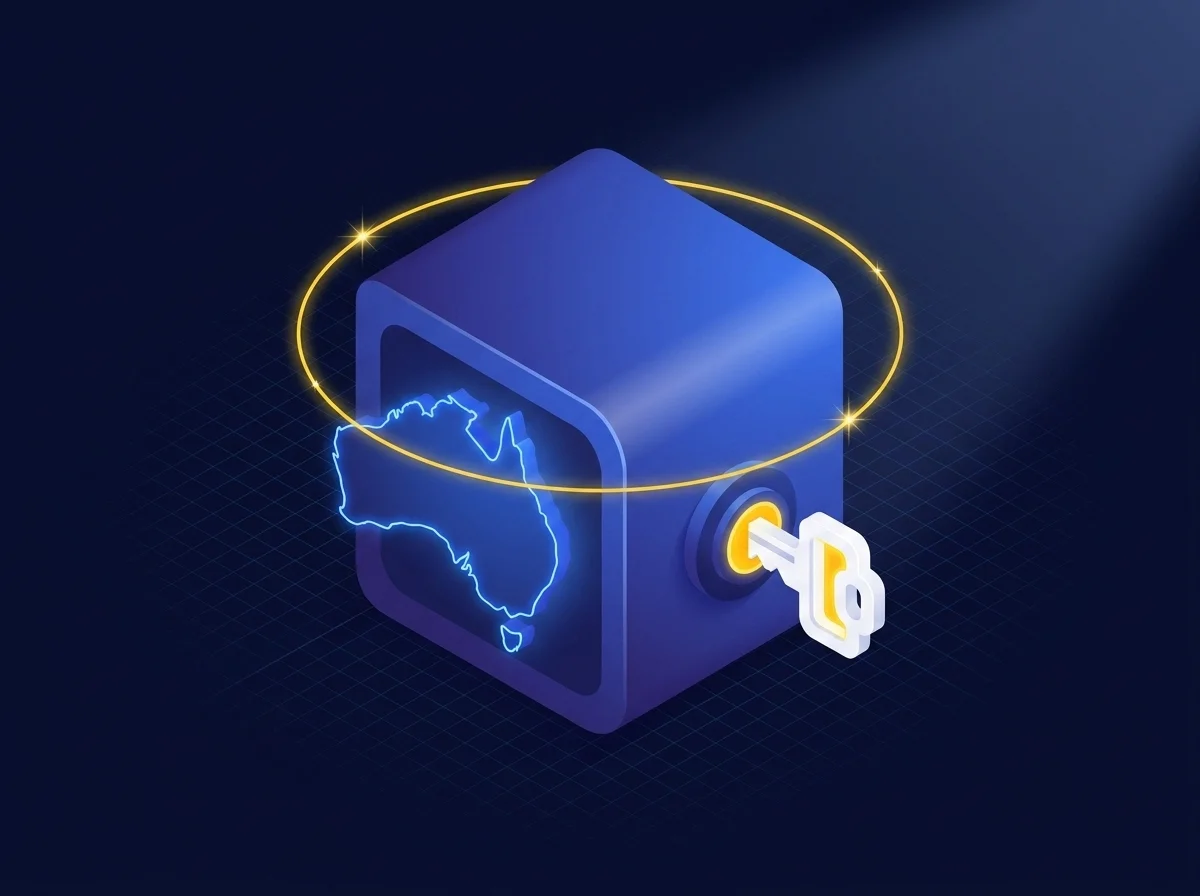
Protect Sensitive Data With Strong Controls
Kiteworks offers single-tenant hosting and data sovereignty so Australian government agencies and private sector companies have a true control plane for secure data exchange when sharing and storing sensitive data. The Kiteworks platform, including the data you store and share, is entirely hosted within Australia while a separate AWS virtual private cloud (VPC) is utilized for all processing. You control the encryption keys, so only you can access the files (Kiteworks does not have access to your data). Lastly, comprehensive reporting and audit logs provide a comprehensive, detailed look at who is accessing your data and with whom they’re sharing it.
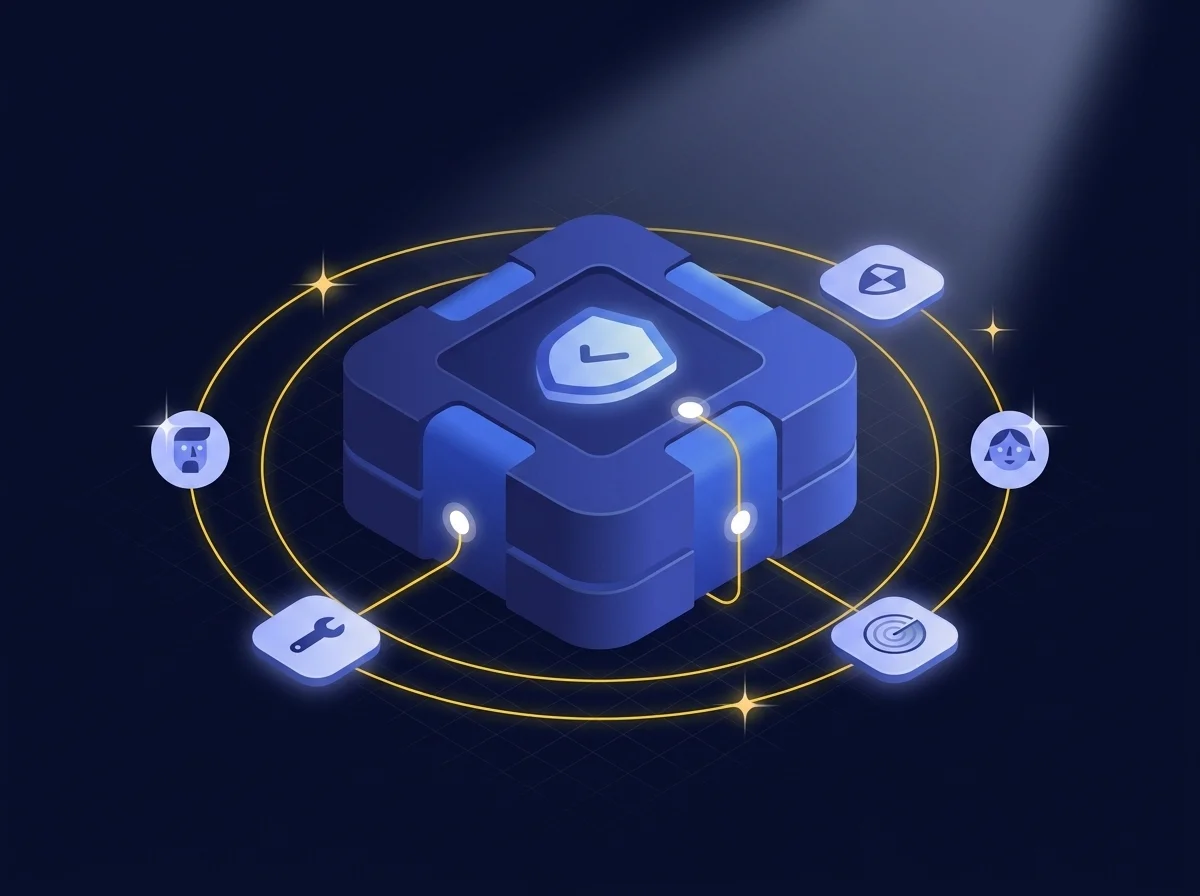
Protect Information Integrity With a Layered Defense-in-Depth Approach
Kiteworks’ layered defense strategy uses multiple security measures to protect the integrity of the information you store and share. This includes: least-privilege defaults and role-based access controls, secure data storage and transmission, user activity monitoring, and multi-factor authentication. You configure your own policy and security controls so Kiteworks meets your unique security requirements. Your data is protected by a hardened virtual appliance with WAF and network firewalls, automated alerting and intrusion detection, unified logging for rapid event response, and security integrations like ATP, DLP, SSO, LDAP, HSM, and others.

Maximize Uptime and Protection With Premium Support
Powering the platform is Kiteworks’ secure cloud hosting that includes patching and update services, named service representatives, enhanced service-level agreements (SLAs), and other high-touch services. Highly qualified Kiteworks support engineers address system errors, loss of functionality, configuration issues, feature requests, and more, available via telephone or remote system access 24 hours a day, seven days a week. Tightened SLA and priority case handling, with one-hour turnaround time for Level 1 or Critical Priority issues. Annual health check and deployment review, including storage capacity, file consistency, contention, deadlocks, database consistency, memory utilization, and CPU utilization, help you maximize the value of your Kiteworks deployment. Lastly, Kiteworks support engineers apply all software updates and security patches per an agreed-to schedule.
Additional Assurance Beyond IRAP
Kiteworks’ IRAP assessment does much more than enhance your security posture and build trust with your customers. Kiteworks supports several of your security and compliance programs. Kiteworks, in fact, complies with GDPR, SOC 2, ISO 27000 standards, FIPS 140-3, NIST 800-171, Cyber Essentials Plus, and SSAE-18 and supports many other data privacy regulations and standards, including HIPAA, CMMC, ITAR, GxP, NIS 2, NIST CSF, and others. Because Kiteworks is engineered from the ground up with an emphasis on security, your organization can demonstrate to your own customers that security is a top priority. In this current threat landscape, marked by an ever-increasing number of risks and attacks, organizations that prioritize security and data privacy often enjoy a distinct competitive advantage.
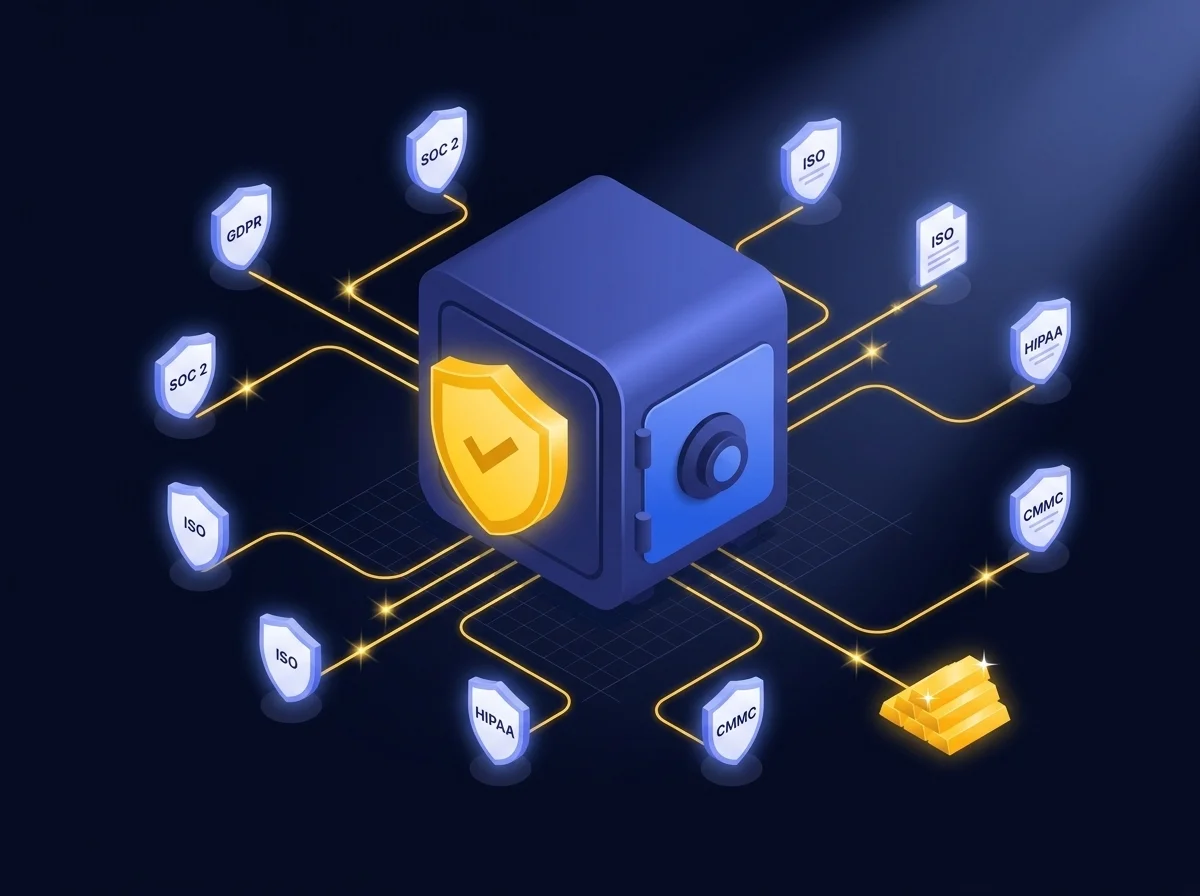
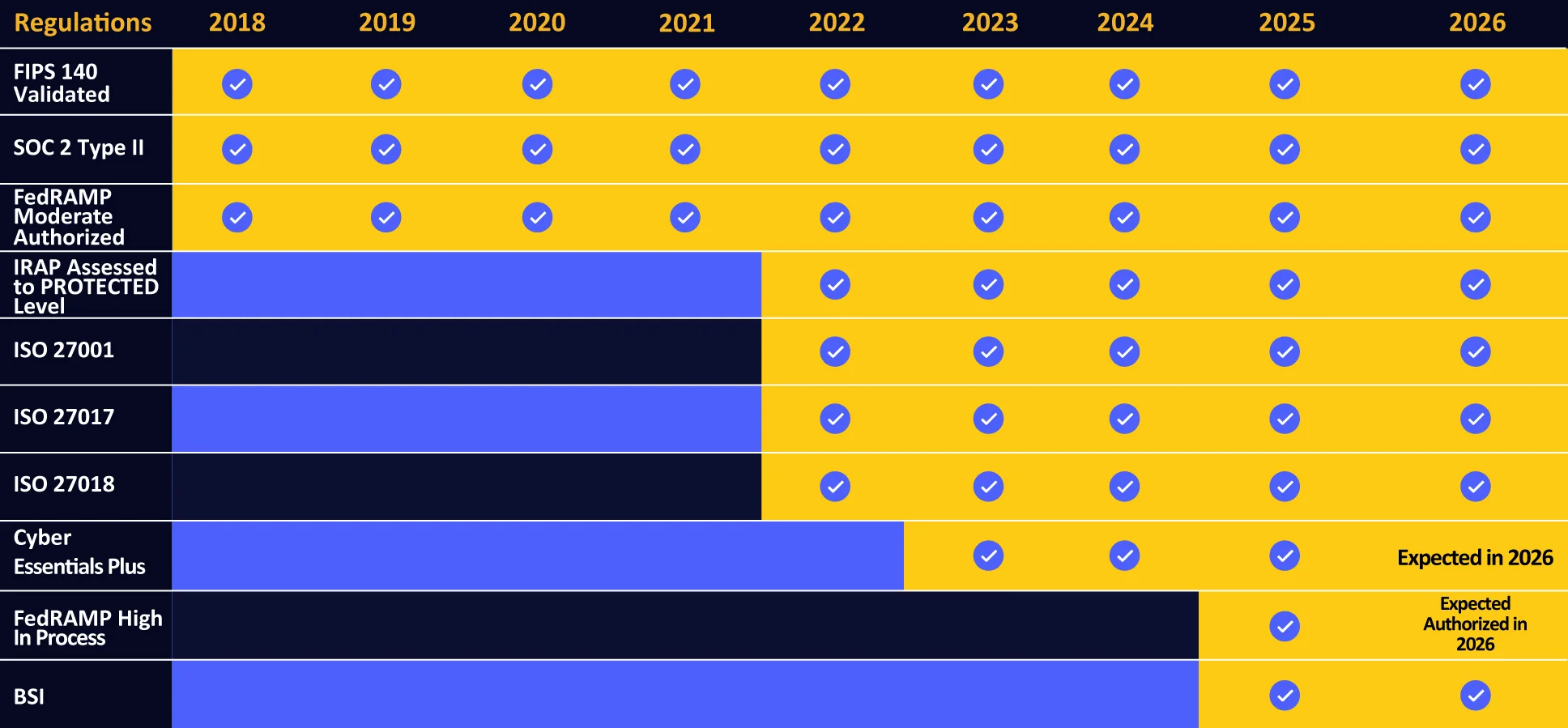
Kiteworks touts a long list of compliance, assurance, and certification achievements.
Frequently Asked Questions
The Information Security Registered Assessors Program (IRAP) gives organisations access to ASD-endorsed IRAP assessors who independently assess systems and services against the Australian Government Information Security Manual (ISM). The assessor produces an assessment report and controls matrix. IRAP does not certify, endorse or approve a system.
An IRAP assessment gives the authorising officer an independent, risk-based view of control effectiveness. It informs the decision to authorise a system but does not make that decision.
Under the Protective Security Policy Framework (Table 21), outsourced IT and cloud services processing or storing SECRET, PROTECTED, OFFICIAL: Sensitive or OFFICIAL government data must be IRAP-assessed first. PSPF requirement 0109 expects cloud providers to have been assessed within the previous 24 months against the latest ISM.
An organisation engages an ASD-endorsed IRAP assessor. The assessment has four stages: plan and prepare, define the assessment boundary, assess the controls against the ISM, and produce the assessment report and controls matrix. Controls are rated as outcomes such as Effective or Ineffective. There is no pass or fail, and assessors do not recommend whether to authorise a system.
No. An IRAP assessment is a separate, independent assessment of a system’s controls against the Australian Government Information Security Manual (ISM). It doesn’t replace, and isn’t a substitute for, other frameworks or certifications, and it doesn’t certify compliance with any of them. The assessment report and controls matrix form part of an agency’s authorisation package, alongside documents such as the system security plan and the continuous monitoring plan. The agency’s authorising officer weighs all of this when deciding whether to authorise a system. IRAP assessors may also consider evidence from other assessments, such as Hosting Certification Framework reports, as inputs. Requirements differ by organisation and procurement, so consult your legal and compliance teams about your specific obligations.
Featured Resources
Kiteworks’ IRAP-assessed Private Content Network Gives MinterEllison an Advantage 
Kiteworks’ IRAP-assessed Private Content Network Gives MinterEllison an Advantage
Kiteworks Supports the Australian Government Information Security Manual (ISM) 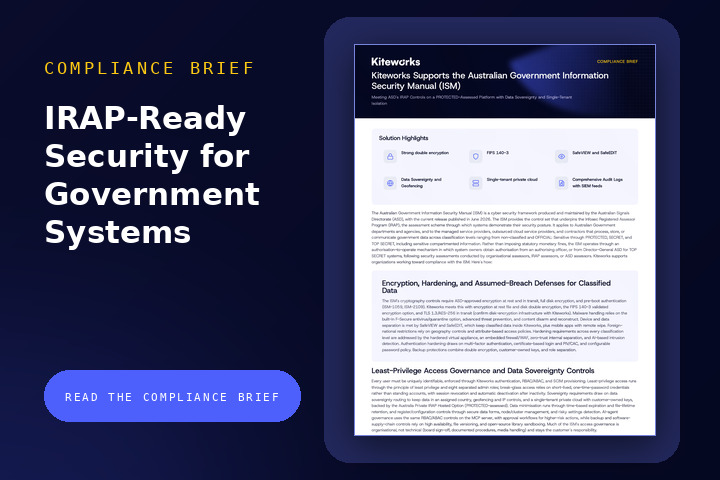
Kiteworks Supports the Australian Government Information Security Manual (ISM)
IRAP vs. Kiteworks Hosted vs. On Premises Deployment Comparison 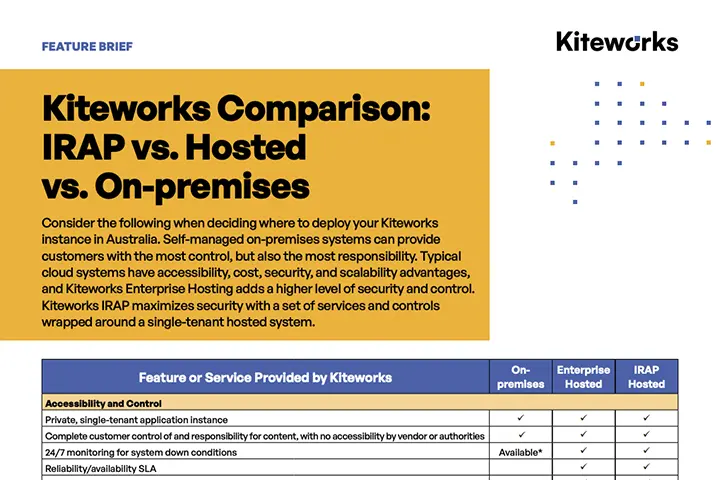
IRAP vs. Kiteworks Hosted vs. On Premises Deployment Comparison
MinterEllison: Protecting Sensitive Data in Compliance With IRAP 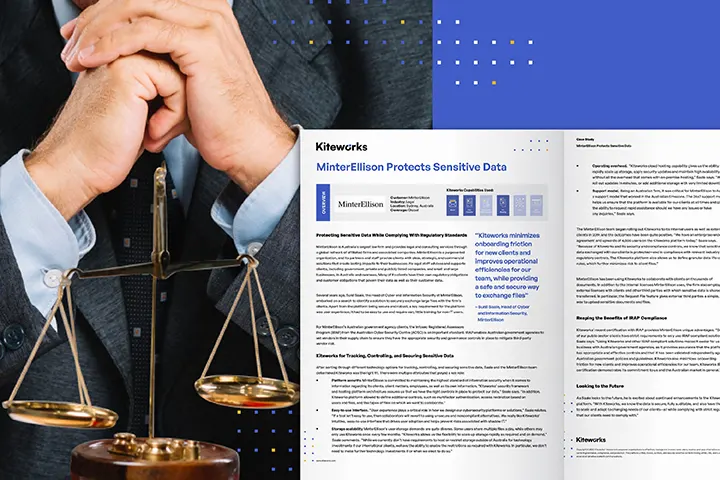
MinterEllison: Protecting Sensitive Data in Compliance With IRAP
Kiteworks Supports the Australian Government Information Security Manual (ISM)