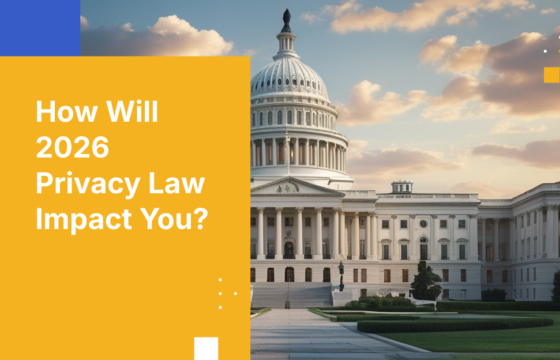
On March 19, 2026, Representative Zoe Lofgren (D-CA-18) introduced H.R. 8014, the Online Privacy Act of 2026, in the U.S. House of Representatives. At 151 pages across six titles, the...
On April 15, 2026, SecurityWeek reported that the Model Context Protocol — the open standard that wires AI agents into enterprise tools, APIs, and data sources — contains a “by...
Stanford’s Institute for Human-Centered Artificial Intelligence published its 2026 AI Index Report this month, and most coverage has focused on the U.S.-China technology race — Chinese models closing to within...
The Wave That Redefined AI Security Risk Between June 2025 and April 2026, security researchers disclosed six critical AI vulnerabilities across platforms that most enterprises rely on daily. Taken individually,...
In April 2026, Anthropic released a preview of Claude Mythos, a general-purpose frontier model whose vulnerability research capabilities emerged not from specialized training but as a downstream consequence of improvements...
Israeli technology companies developing artificial intelligence systems face heightened scrutiny under Amendment 13, a regulatory framework that imposes strict accountability requirements on AI-driven decision-making processes. These provisions require organisations to...
Israeli technology companies face heightened regulatory scrutiny when processing personal data at scale, particularly when transferring information across borders. Amendment 13 to Israel’s Privacy Protection Regulations establishes specific requirements for...
An Attacker’s URL, a Back-End Process, and Your Financial Data on an External Server On April 7, 2026, researchers at Noma Security disclosed GrafanaGhost — an attack that turned Grafana’s...
Many SaaS providers assume DPO appointments remain optional until reaching certain scale thresholds. This assumption creates regulatory risk when specific processing activities trigger mandatory DPO appointment regardless of company size....
Global enterprises with operations in Israel and the European Union face a dual compliance obligation that demands precise alignment between two distinct yet convergent privacy frameworks. Israeli Amendment 13 to...
Critical infrastructure operators face stringent regulatory obligations when a data breach occurs. The NIS2 Directive (Directive 2022/2555) imposes specific timelines for notification, escalation, and documentation following a security incident. Missing...
Israeli SaaS companies operate in one of the world’s most demanding regulatory environments. Between European Union privacy rules, sector-specific mandates in healthcare and finance, and divergent national frameworks across dozens...
Enterprise organisations invest heavily in artificial intelligence to accelerate decision-making, automate workflows, and extract insight from vast data estates. Yet many initiatives stall before delivering measurable value. The failure point...
The Booz Allen Hamilton report released on March 16, 2026, frames a problem that most security leaders sense but few have quantified: The time gap between AI-speed attacks and human-speed...
The first two weeks of March 2026 produced more enacted state AI legislation than most observers expected for the entire quarter. Washington’s legislature adjourned on March 12 after giving final...
Get started.
It’s easy to start ensuring regulatory compliance and effectively managing risk with Kiteworks. Join the thousands of organizations who are confident in how they exchange private data between people, machines, and systems. Get started today.
Manage Consent
To provide the best experiences, we use technologies like cookies to store and/or access device information. Consenting to these technologies will allow us to process data such as browsing behavior or unique IDs on this site. Not consenting or withdrawing consent, may adversely affect certain features and functions.
Functional
Always active
The technical storage or access is strictly necessary for the legitimate purpose of enabling the use of a specific service explicitly requested by the subscriber or user, or for the sole purpose of carrying out the transmission of a communication over an electronic communications network.
Preferences
The technical storage or access is necessary for the legitimate purpose of storing preferences that are not requested by the subscriber or user.
Statistics
The technical storage or access that is used exclusively for statistical purposes.The technical storage or access that is used exclusively for anonymous statistical purposes. Without a subpoena, voluntary compliance on the part of your Internet Service Provider, or additional records from a third party, information stored or retrieved for this purpose alone cannot usually be used to identify you.
Marketing
The technical storage or access is required to create user profiles to send advertising, or to track the user on a website or across several websites for similar marketing purposes.