Streamline NYDFS Cybersecurity Requirements With Zero-Trust Architecture and Data Protection
The New York State Department of Financial Services (NYDFS) Second Amendment to 23 NYCRR 500 requires all covered entities operating under licenses, registrations, charters, or similar authorizations under New York’s Banking Law, Insurance Law, or Financial Services Law to implement comprehensive cybersecurity programs encompassing vulnerability management, access controls, encryption, incident response planning, and third-party risk management.
Kiteworks supports NYDFS-regulated entities through encrypted file sharing, secure collaboration tools, and detailed audit capabilities that address the regulation’s stringent data protection and reporting requirements. The platform delivers zero-trust architecture and a hardened virtual appliance while maintaining comprehensive logs and SIEM integration for continuous monitoring. Organizations achieve regulatory compliance through role-based access controls, automated user life-cycle management, and real-time security monitoring.
Establishing Zero-Trust Architecture With Comprehensive Security Functions
Financial institutions face complex challenges implementing cybersecurity programs that protect confidentiality, integrity, and availability of information systems while performing six core functions:
- identifying risks
- protecting systems
- detecting events
- responding to incidents
- recovering operations
- fulfilling reporting obligations.
Organizations must deploy comprehensive frameworks that address vulnerability management, access controls, encryption, and continuous monitoring across all communication channels and data workflows within strict regulatory time frames.


Managing Complex Access Privileges Across Multiple User Categories
Covered entities struggle to implement least-privilege principles while:
- managing limited privileged accounts
- conducting annual access reviews
- securing remote protocols
- ensuring prompt access termination upon employee departures
Class A companies face additional requirements for privileged access management solutions and automated common password blocking, creating complex access governance frameworks that must integrate with existing identity management systems while maintaining separation of duties across diverse user populations.
Continuous Security Monitoring With Mandatory Training Requirements
Organizations must implement risk-based controls for monitoring authorized user activities, detecting unauthorized access, protecting against malicious code through web and email filtering, and providing annual social engineering training. Class A companies face additional requirements for endpoint detection solutions and centralized logging systems, creating comprehensive security operations and human awareness defense layers that require real-time threat detection, automated response capabilities, and continuous compliance documentation across all communication channels.

Hardened Virtual Appliance With Tiered Component Protection
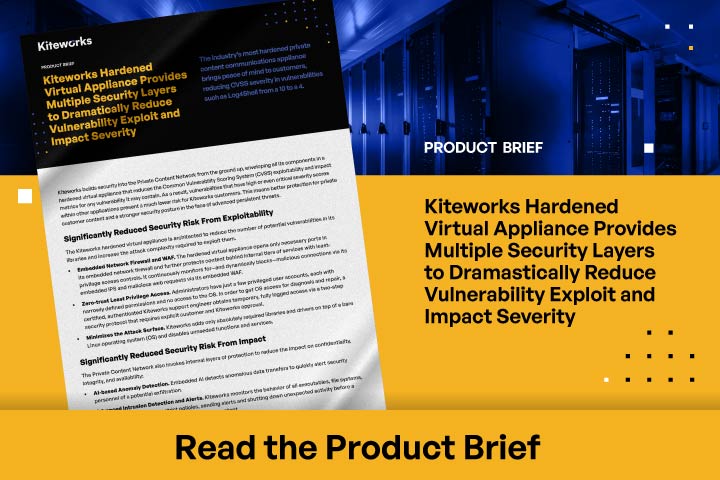
Kiteworks addresses these requirements through hardened virtual appliance deployment that minimizes attack surfaces using zero-trust assume-breach architecture with tiered component positioning. The platform partitions service layers to block lateral movement and exfiltration while providing comprehensive cybersecurity functions including:
- asset management capabilities
- native user management with external identity system integration
- consolidated normalized logging across all communication channels with continuous SIEM feeds via syslog and Splunk Forwarder.
Role-Based Controls With Automated User Life-Cycle Management
Kiteworks implements comprehensive access privilege management through role-based access controls that assign permission sets controlling feature and resource access, combined with attribute-based access controls governing data access dynamically. The system uses least-privileged defaults where users automatically receive minimal necessary privileges, with eight default admin roles meeting most regulatory requirements and custom roles for specific needs. Integration with LDAP and Microsoft Active Directory enables automatic user onboarding, offboarding, and role updates.


Real-Time Logging With Embedded Security Controls
Kiteworks maintains comprehensive log data for security and compliance activities, automatically cleaning, normalizing, standardizing, and aggregating information into unified streams. The platform includes an embedded web application firewall that detects and blocks web and REST API attacks with zero maintenance requirements. Comprehensive consolidated normalized logging spans all communication channels with continuous SIEM feeds, while the system feeds SIEMs in real time, unlike competitors that delay log entries up to 72 hours.
Frequently Asked Questions
Zero-Trust Architecture is a security model that assumes no user or system is inherently trustworthy, requiring continuous verification for access to resources. It is crucial for financial institutions to protect the confidentiality, integrity, and availability of information systems while addressing risks, protecting systems, detecting events, responding to incidents, recovering operations, and fulfilling reporting obligations within strict regulatory frameworks.
Kiteworks implements comprehensive access privilege management through role-based access controls that assign permission sets for feature and resource access, combined with attribute-based controls for dynamic data access. It uses least-privileged defaults, offers eight default admin roles to meet regulatory requirements, and supports custom roles. Integration with LDAP and Microsoft Active Directory enables automated user onboarding, offboarding, and role updates.
Organizations face challenges in implementing risk-based controls for monitoring authorized user activities, detecting unauthorized access, protecting against malicious code, and providing annual social engineering training. Class A companies have additional requirements for endpoint detection solutions and centralized logging systems, necessitating real-time threat detection, automated responses, and continuous compliance documentation across all communication channels.
Kiteworks’ hardened virtual appliance enhances cybersecurity by minimizing attack surfaces through a zero-trust assume-breach architecture with tiered component positioning. It partitions service layers to prevent lateral movement and data exfiltration, while offering asset management, native user management with external identity system integration, and consolidated normalized logging across communication channels with continuous SIEM feeds.